

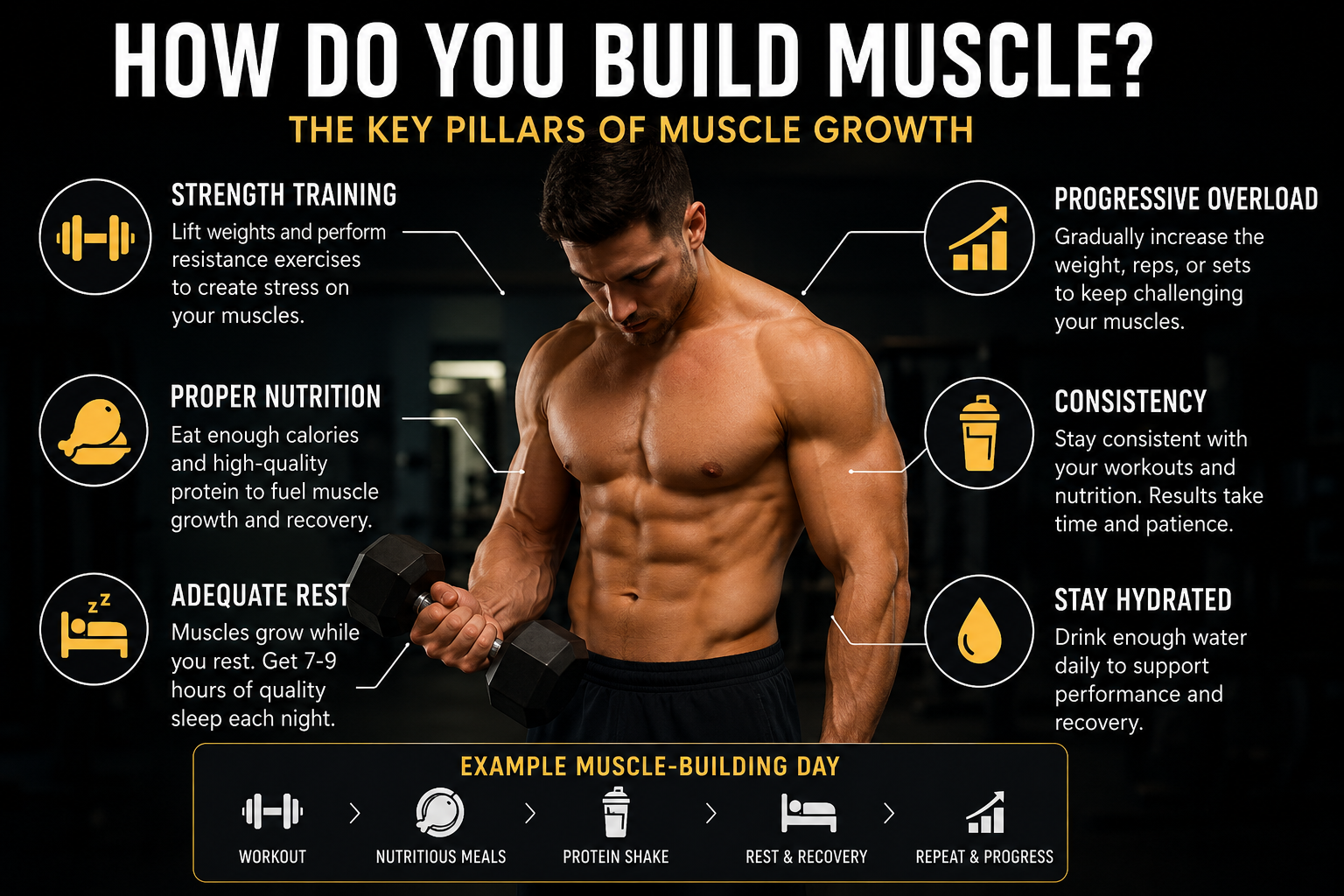
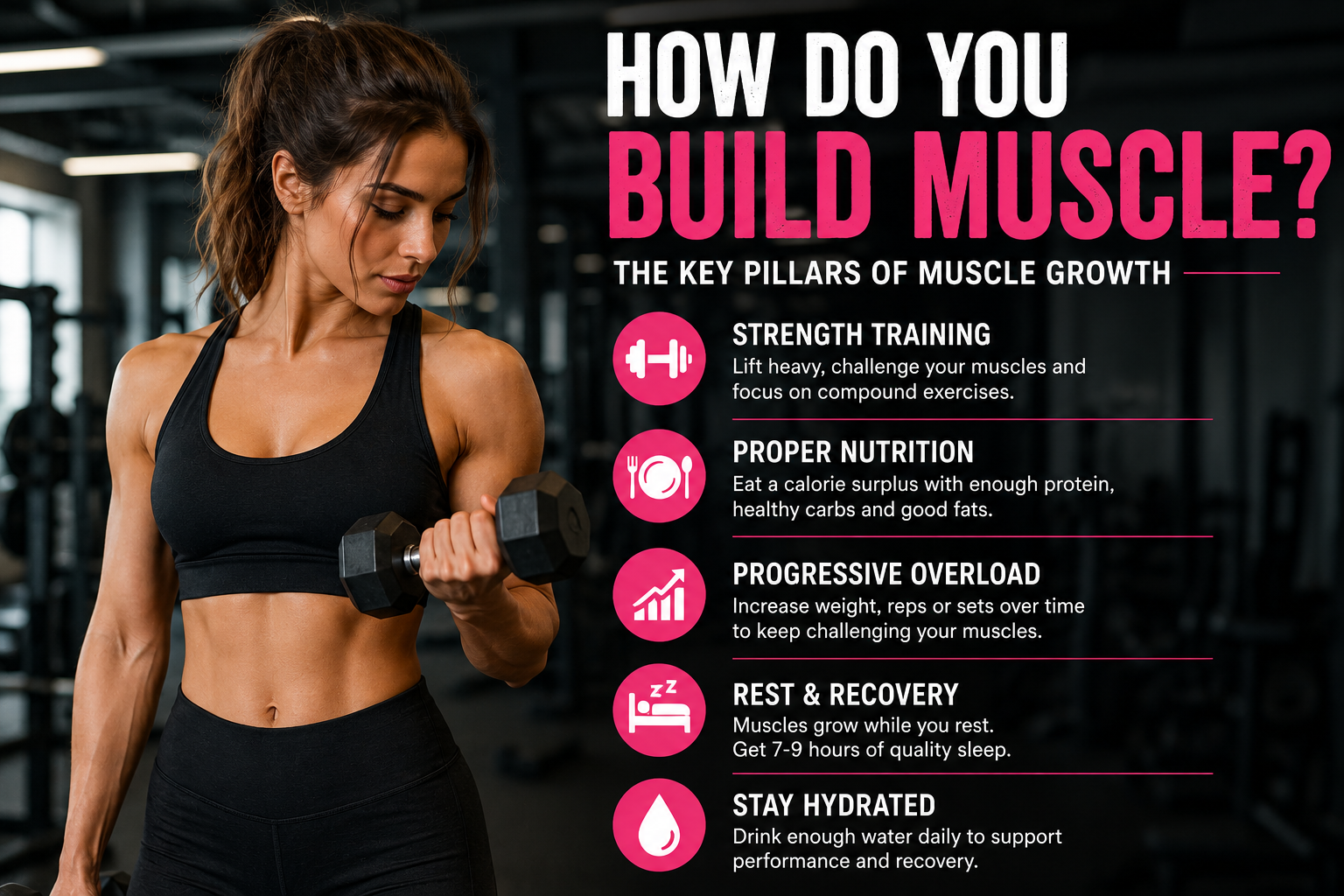
If you are wondering how do you build muscle, the answer is straightforward. Muscle growth happens when you challenge your muscles through resistance training, consume enough protein and calories, allow adequate recovery, and progressively increase the difficulty of your workouts. Building muscle takes consistency, but anyone can achieve noticeable results with the right plan.
Muscle building is not limited to bodybuilders or athletes. Whether your goal is improving strength, enhancing your appearance, boosting metabolism, or supporting healthy aging, increasing lean muscle mass provides significant health benefits.
This guide explains the science behind muscle growth and the practical steps you can follow to build muscle naturally.
How Does Muscle Growth Work?
Muscles grow through a process called muscle protein synthesis. During resistance training, tiny muscle fibers experience stress. Your body repairs these fibers during recovery, making them thicker and stronger over time.
For muscle growth to occur consistently, your body needs three essential elements:
Progressive resistance through exercise
Adequate nutrition, especially protein
Enough recovery between workouts
Skipping any one of these can slow your progress.
Step 1: Follow a Structured Strength Training Program
Resistance training is the foundation of muscle growth. Lifting weights creates the stimulus your muscles need to grow.
Beginners should train three to four days each week, while experienced lifters may benefit from four to six sessions depending on recovery.
Focus on compound exercises because they work multiple muscle groups at the same time.
Examples include:
Squats
Deadlifts
Bench press
Overhead press
Pull ups
Rows
Lunges
These exercises build strength efficiently while promoting overall muscle development.
Step 2: Use Progressive Overload
Muscles adapt quickly. To continue growing, you must gradually increase the training challenge.
Progressive overload can include increasing weight, performing more repetitions, adding another set, or improving exercise technique.
Small improvements each week create significant muscle gains over several months.
Tracking your workouts helps ensure consistent progress.
Step 3: Eat Enough Protein
Protein supplies the amino acids needed to repair and build muscle tissue.
Most research suggests consuming between 1.6 and 2.2 grams of protein per kilogram of body weight each day for optimal muscle growth.
Excellent protein sources include chicken breast, fish, eggs, lean beef, Greek yogurt, cottage cheese, tofu, and legumes.
Distribute protein evenly across meals rather than eating most of it at dinner.
Step 4: Eat Enough Calories
Building muscle requires energy. If you consistently eat too few calories, muscle growth becomes difficult.
A moderate calorie surplus of approximately 200 to 300 calories above maintenance supports lean muscle gain while minimizing excess fat accumulation.
Choose nutrient dense foods instead of relying on processed high calorie snacks.
Whole foods provide vitamins, minerals, and energy needed for training performance and recovery.
Step 5: Prioritize Recovery
Muscles grow while you recover, not while you exercise.
Aim for seven to nine hours of quality sleep each night. Sleep supports hormone production, tissue repair, and overall recovery.
Avoid training the same muscle group intensely on consecutive days. Allow at least 48 hours before repeating heavy work for the same muscles.
Recovery also includes managing stress and staying hydrated.
Step 6: Stay Consistent
Building muscle is a long term process. Visible changes often appear after six to eight weeks, while significant transformations typically require several months of consistent training and nutrition.
Avoid switching programs too frequently. Follow one structured plan long enough to measure progress.
Consistency always outperforms perfection.
Best Foods for Muscle Growth
A balanced muscle building diet should include high quality protein, healthy carbohydrates, and beneficial fats.
Good choices include chicken, turkey, eggs, salmon, lean beef, Greek yogurt, rice, oats, potatoes, whole grain bread, fruits, vegetables, nuts, seeds, olive oil, and avocado.
Proper hydration is equally important because dehydration can reduce strength and workout performance.
Sample Muscle Building Meal Plan
Breakfast may include eggs, oatmeal, and fruit.
Lunch could consist of grilled chicken, rice, and vegetables.
Dinner may include salmon, sweet potatoes, and broccoli.
Snacks can include Greek yogurt, cottage cheese, mixed nuts, or a protein shake.
This simple approach provides steady energy and adequate nutrients throughout the day.
How Long Does It Take to Build Muscle?
Beginners often gain muscle faster than experienced lifters because their bodies respond quickly to resistance training.
With proper nutrition and consistent workouts, beginners may gain one to two pounds of lean muscle each month. Progress becomes slower as training experience increases.
Building muscle naturally requires patience, but the results are long lasting.
Common Mistakes That Slow Muscle Growth
Many people train hard but overlook factors that limit progress.
Not eating enough protein
Skipping recovery days
Changing workout programs too often
Using poor exercise technique
Training without progressive overload
Sleeping too little
Correcting these habits often produces better results than increasing workout volume.
Should You Do Cardio While Building Muscle?
Yes. Moderate cardio supports heart health and recovery without preventing muscle growth.
Two to three sessions of low or moderate intensity cardio each week are generally sufficient.
Excessive cardio combined with inadequate calorie intake may interfere with muscle gain.
Balance is the key.
Do You Need Supplements?
Supplements are optional. Most muscle growth comes from proper training and nutrition.
Protein powder can help meet daily protein goals when whole food intake is insufficient.
Creatine monohydrate is one of the most researched supplements and may improve strength and training performance when combined with resistance exercise.
Whole foods should always remain the foundation of your diet.
Frequently Asked Questions
How long does it take to build muscle?
Most beginners notice visible changes within six to eight weeks of consistent training and proper nutrition.
How much protein do I need to build muscle?
Around 1.6 to 2.2 grams of protein per kilogram of body weight supports optimal muscle growth.
Can I build muscle without going to a gym?
Yes. Resistance bands, adjustable dumbbells, and bodyweight exercises can effectively build muscle when progressive overload is applied.
Do muscles grow on rest days?
Yes. Muscle repair and growth primarily occur during recovery periods after training.
Can older adults build muscle?
Yes. Resistance training benefits adults of all ages and helps maintain strength, mobility, and bone health.
Page Source References
American College of Sports Medicine. Resistance Training Guidelines.
https://www.acsm.org
National Strength and Conditioning Association. Strength Training Research.
https://www.nsca.com
National Institutes of Health. Protein and Skeletal Muscle Research.
https://www.ncbi.nlm.nih.gov
Harvard T.H. Chan School of Public Health. Protein and Nutrition Research.
https://www.hsph.harvard.edu/nutritionsource/what-should-you-eat/protein/





Leave a Reply